
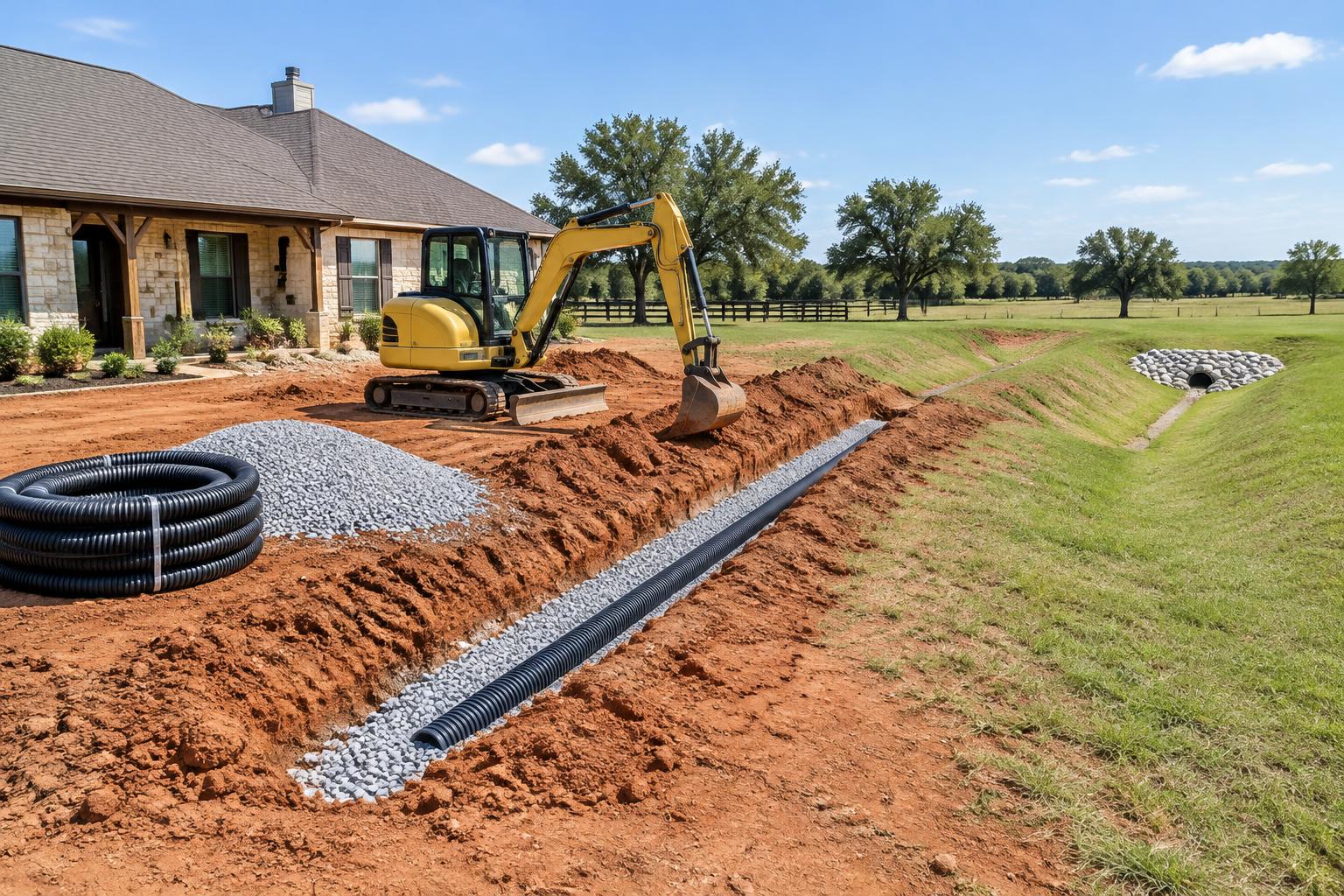
Residential drainage installation in Bowie, Texas requires professional grading and subsurface solutions to redirect standing water away from foundations. Shupak Earthworks, a heavy civil contractor based in Bowie, provides sitework and utility expertise for homeowners. Crews assess soil runoff and drainage needs to help protect property from moisture damage.
Key Takeaways
- Residential drainage installation combines grading and subsurface solutions to redirect standing water away from foundations.
- Soil composition, terrain and existing infrastructure affect drainage; private yard drainage needs to be assessed separately from public water and sewer systems.
- Insufficient slope can leave persistent pooling in low spots and contribute to erosion and foundation moisture problems.
- Regular inspections and maintenance help identify blockages before water backs up.
What causes drainage problems in Bowie, TX?
Bowie properties can face drainage challenges from soil composition, terrain and infrastructure limitations. Private yard drainage remains the homeowner's responsibility. Without suitable grading, properties can lose usable outdoor space to persistent standing water.
Why does water pool in Bowie yards after rain?
Flat terrain and clay-heavy soils can slow natural percolation. Water collects in low spots where the ground lacks sufficient slope. Clogged gutters compound the problem. When gutters overflow, concentrated roof runoff saturates the soil beside the foundation, creating moisture problems that can worsen with each storm.
How do underground utility lines affect drainage?
Damaged sewer laterals or poorly restored utility trenches can contribute to wet soil or create unintended water pathways beneath the surface. Persistent soggy areas should be assessed to distinguish stormwater drainage problems from a possible utility leak. Suspected water or sewer problems need attention from the appropriate utility provider or qualified repair professional.
Shupak Earthworks brings over 15 years of hands-on experience to earthwork projects. The company evaluates grading, soil type and existing infrastructure before recommending drainage work. Common approaches include regrading swales, installing French drains where appropriate, and routing downspout discharge away from the foundation. Each approach should address the cause of pooling rather than simply masking symptoms.
How do you install a residential drainage system?
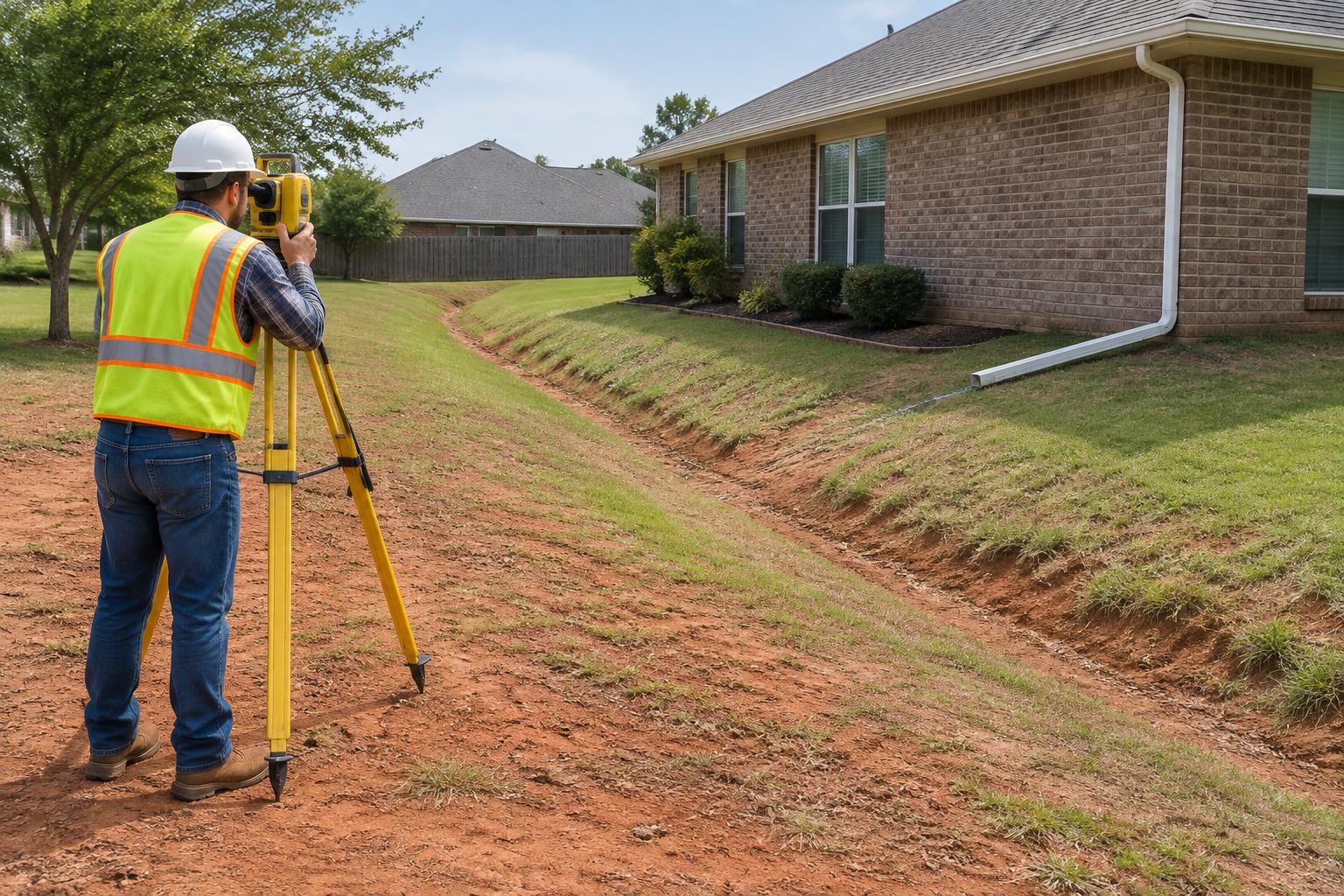
A residential drainage installation in Bowie, Texas begins with a thorough site assessment. Shupak Earthworks evaluates slope, soil composition and water-flow patterns before equipment moves. The drainage route and a suitable discharge point need to be established before excavation begins.
What site preparation is required before drainage installation?
Excavation and grading establish the required slope and subgrade stability. Operators clear vegetation within the work area, cut and fill soil, and compact the base as required by the project. Proper preparation helps reduce settling that could compromise pipe alignment.
How are drainage pipes and aggregate placed?
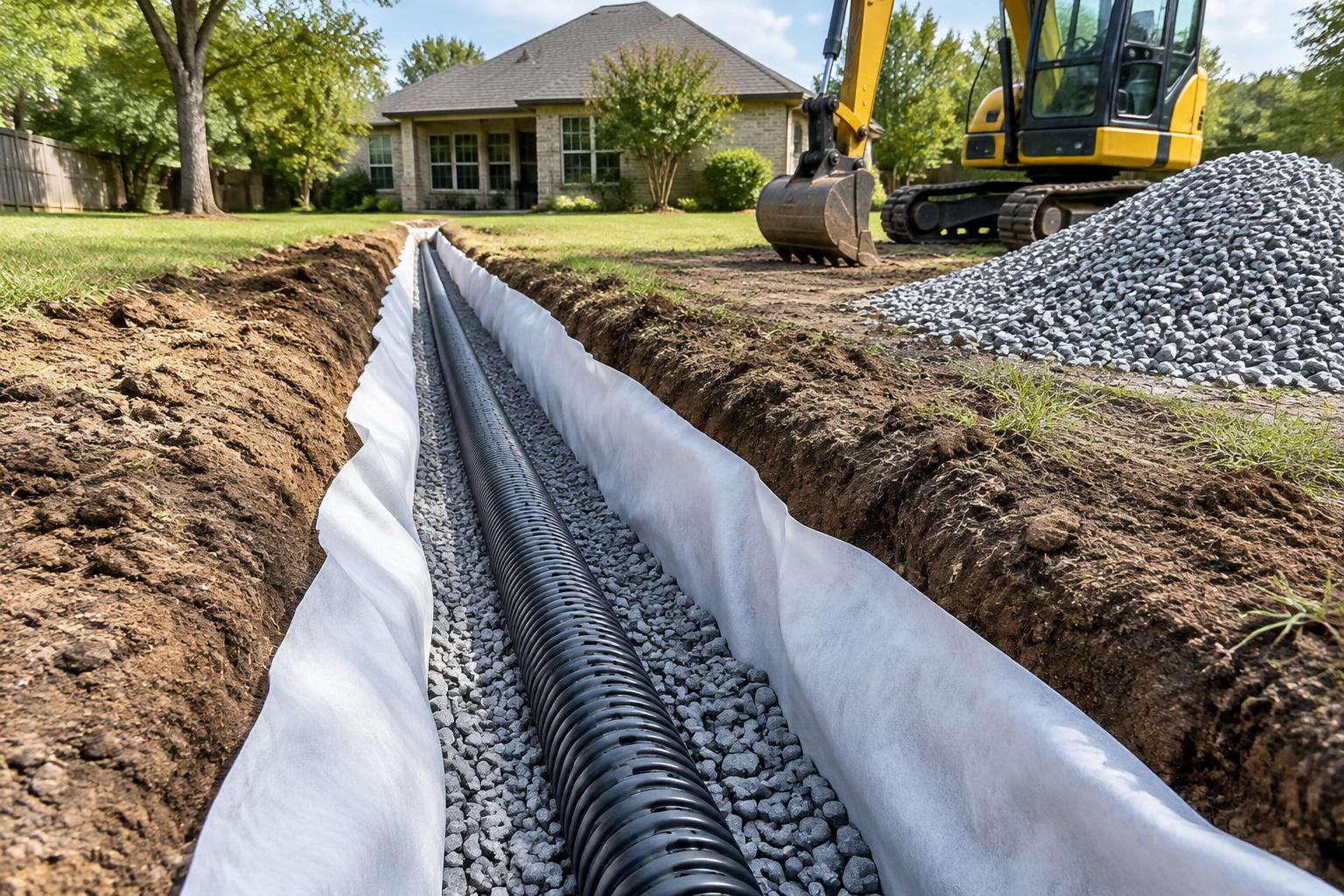
Professional installation involves trenching, pipe sizing and aggregate placement. Crews excavate to the specified depth and slope, lay perforated or solid pipe depending on the application, and use suitable bedding and aggregate where required. Shupak Earthworks provides storm drainage and utility installation services; the exact system depends on the site's conditions and project requirements.
- 1Locate and mark utilities and the planned drainage path before digging.
- 2Excavate trenches to the required depth and slope.
- 3Install pipe with the specified bedding and aggregate envelope.
- 4Backfill and compact in lifts to restore the surface grade.
- 5Grade the final surface to direct water toward planned collection points.
What happens after the system is buried?
Final grading directs surface runoff away from the home. Compaction requirements, testing and finish elevations should be confirmed in the project scope. Discharge and erosion-control requirements also need to be checked for the property. Long-term performance depends on the design, installation, soil conditions and ongoing maintenance.
What maintenance keeps drainage working in Bowie?
Effective drainage maintenance helps prevent standing water and moisture problems. Neglected drains can become blocked with leaves, sediment and grass clippings, increasing the risk of water backing up during heavy rain.
What routine checks prevent drainage failure?
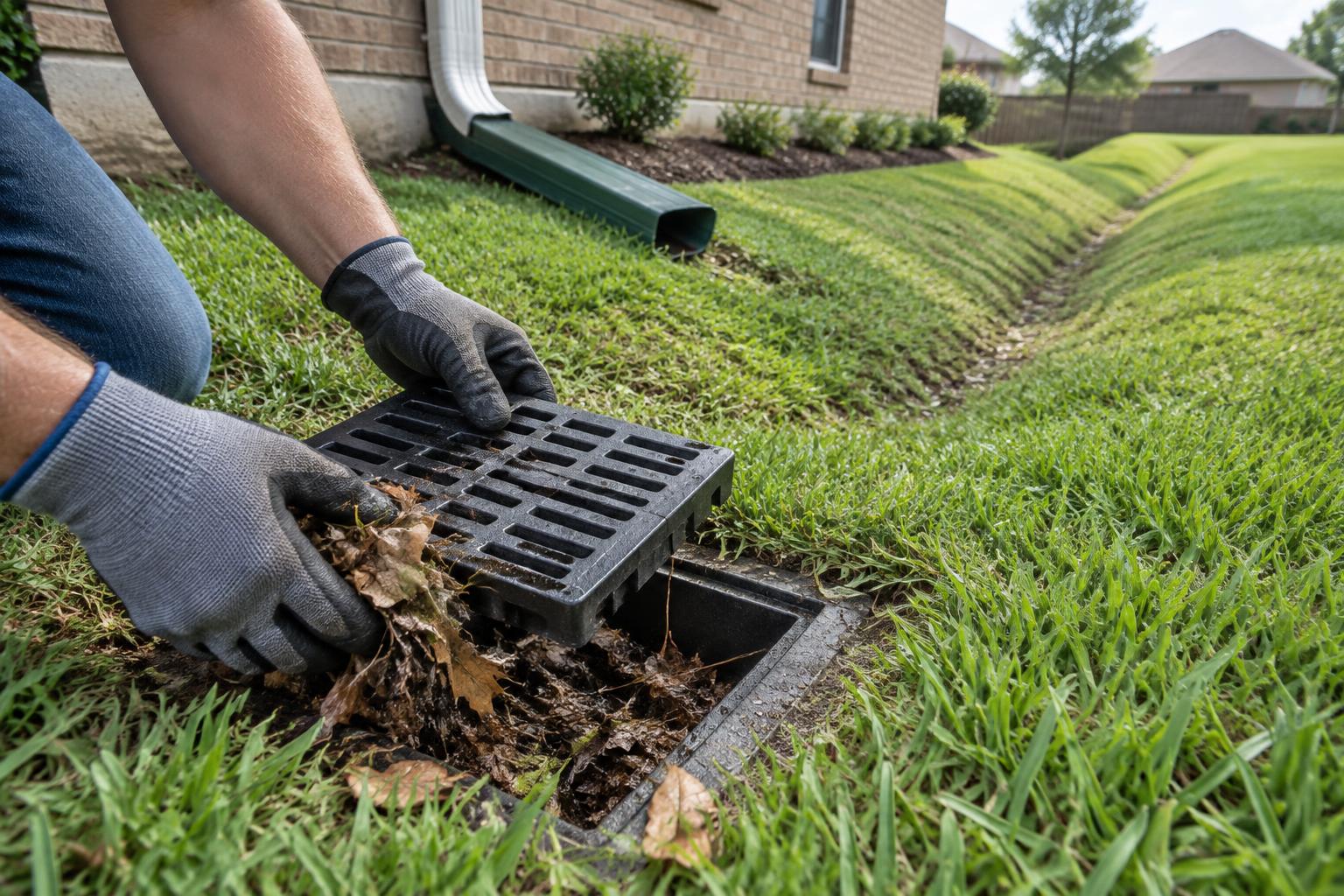
Three inspections can catch problems before water backs up. First, walk the property after a storm and note any pooling areas. Second, clear debris from accessible catch basins and channel openings. Third, examine downspout connections for separation or blockage. Gutters that sag or hold water may need repair or replacement.
- 1Inspect accessible surface drains monthly and remove leaves, sediment and grass clippings.
- 2Have underground pipes checked or cleaned when flow slows, following the installer's maintenance guidance.
- 3Review settled areas where the ground now directs water toward the foundation.
- 4Repair cracked or separated gutter sections before the next rainfall.
How do property owners handle after-hours drainage emergencies?
For a suspected public water or sewer system break, contact the appropriate utility provider through its official reporting channel. Private-property drainage problems require a separate site assessment; do not assume a yard drain issue is a public utility emergency.
Shupak Earthworks office hours are Monday through Friday, 8 AM to 5 PM. Contact the team to arrange a site review and discuss drainage work in Bowie and the surrounding North Texas service area. Project scheduling depends on scope, conditions and availability.
FAQ
- What causes drainage problems in Bowie, TX?
- Soil composition, low spots, insufficient slope and concentrated roof runoff can all contribute to pooling. Private yard drainage remains the homeowner's responsibility and should be assessed separately from suspected public utility problems.
Conclusion
For Bowie homeowners dealing with standing water after storms, a site assessment is the first step toward a suitable drainage solution. Shupak Earthworks evaluates grading, soil type and existing infrastructure before recommending work. Regrading swales, installing appropriate subsurface drainage and routing downspout discharge away from foundations can address the causes of pooling. Contact the team to discuss your property and arrange a site review.
Explore our Storm Drainage services